


8 Satsang, Canada, Param Sant Kanwar Saheb Ji Maharaj
There are two main events in human life—birth and death. When a child is born, people celebrate. But when death comes, the family and the world cry. Saints have explained that whoever is born must one day die. A soul takes a body, performs actions, creates karma, and then has to take birth again to bear the result of those karmas.
A person does not remember the karmas of past lives. If we could remember our past births, we would not knowingly do wrong actions. In this world, karmas are mainly of two kinds—good karmas and bad karmas. Good karmas bring comfort, peace, and better circumstances. Bad karmas bring suffering, disease, poverty, and difficulties. Some children are born weak, blind, deaf, sick, or with physical limitations. They have not done anything in this life, yet they suffer from birth. This shows that the karmas of previous lives also travel with the soul.

Saints see beyond ordinary vision. They understand the past, present, and future. They warn us that whatever our past karmas may be, the human birth gives us a chance to wash them away. Through the Name of God, the shelter of the Guru, and truthful living, a person can improve both the present and the future.
The word death sounds simple, but when a person thinks deeply about his own death, he begins to understand its reality. Imagine the body lying still, covered with a white cloth. Family members are crying. Relatives and others have gathered for the final farewell. Even those who did not speak properly during life come to say goodbye. This is death.
But Saints say, “Try dying while you are still alive.” This does not mean leaving the body. It means dying to ego, greed, desires, jealousy, criticism, attachment, and sinful actions. If a person can die to these inner weaknesses while living, then the daily suffering of life and the cycle of birth and death can come to an end.
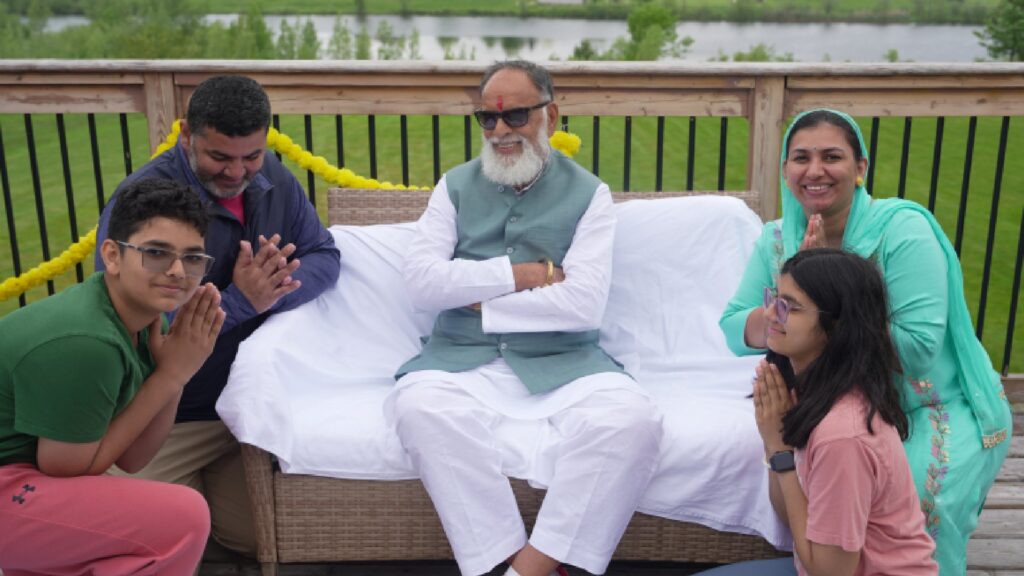
To die while living means to live in the world, but keep the mind attached to the Name of God. It means leaving false disputes, wrong actions, jealousy, hatred, and the feeling of “mine and yours.” It means dealing with everyone with love, serving others, helping as much as possible through body, mind, and wealth, and not hurting anyone through thoughts, words, or actions. Worldly duties are necessary, but remembrance of God should be the greatest duty of life.
Food, clothing, shelter, comfort, and worldly pleasures last only for a short time. In the end, only good actions and the spiritual wealth of God’s Name go with the soul. Charity and helping others are noble deeds, but the true welfare of the soul comes only through the Name of God. When the heart becomes pure, the mind becomes truthful, and the soul connects with God’s Name, then true spiritual earning begins.
Two things are very necessary for the soul—Guru and Naam. Naam connects the soul with God, and the Guru shows the right path. Without the Guru, true knowledge does not arise. A true Guru is the one who removes ignorance, who has himself earned the wealth of Naam, who is detached, truthful, and established on the path of God. Such a Guru teaches the soul how to die while living.

A person who has learned to die while living continues to walk, eat, speak, laugh, work, and fulfill all duties in the world. But inside, his desires, ego, and attachments have died. He does not bind his heart to worldly things. Whether someone praises him or criticizes him, he remains steady. This is the meaning of true fakiri—to accept both good and bad with peace.
As long as a person is trapped in pleasure and pain, praise and insult, mine and yours, good and bad, he remains in bondage. Saints have called this world the prison of Kal. To be free from this prison, one needs Naam, satsang, and the shelter of the Guru. The one who learns to die while living loosens the grip of the world.
A Gurmukh is the one who makes the Guru’s words the foundation of his life. A Manmukh is the one who follows his own mind, ego, selfishness, and desire for respect. A true devotee never considers himself great. Even great Saints called themselves the lowest of the low. For a true devotee, praise and insult, honour and dishonour, good and bad become the same. To the world, he appears to be living like everyone else, but inside, he has died to ego and desires.
This body will one day mix with dust. Whether a person is beautiful, rich, powerful, or holds a high position, the end of the body is the same for everyone. Therefore, the real death is not the death of the body, but the death of the mind’s wrong tendencies. When the mind becomes attached to the feet of God and turns away from worldly attachment, a deep joy and inner sweetness arise. No worldly pleasure can compare with that joy.

This is what it means to die while living: to die toward the world and become alive in God. That alone is true life.
The joy of God’s Name is so deep that all worldly pleasures become tasteless before it. As long as worldly pleasures seem attractive, the taste of Naam does not come. But when the taste of Naam comes, worldly pleasures automatically lose their attraction. Saints have described this love and joy in different words, but the message is the same: the peace found in the Name of God cannot be found anywhere else.
We must perform our worldly duties. We must take care of family, society, and responsibilities. But all this should be done with simplicity, truth, honesty, and love. Do not hurt anyone. Do not deceive anyone. Keep the mind pure and remain connected with the Name of God. This is the true way to live.
Radha swami ji maharaj ji