


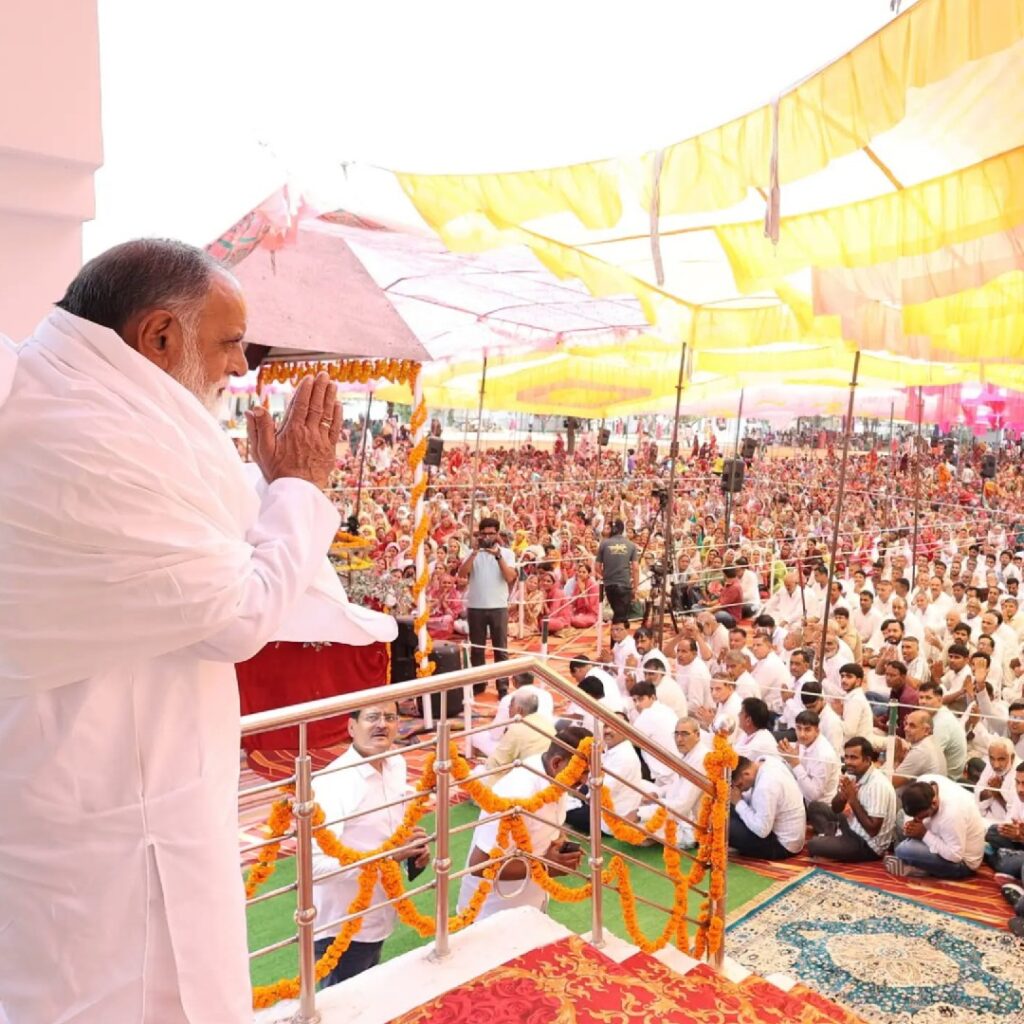
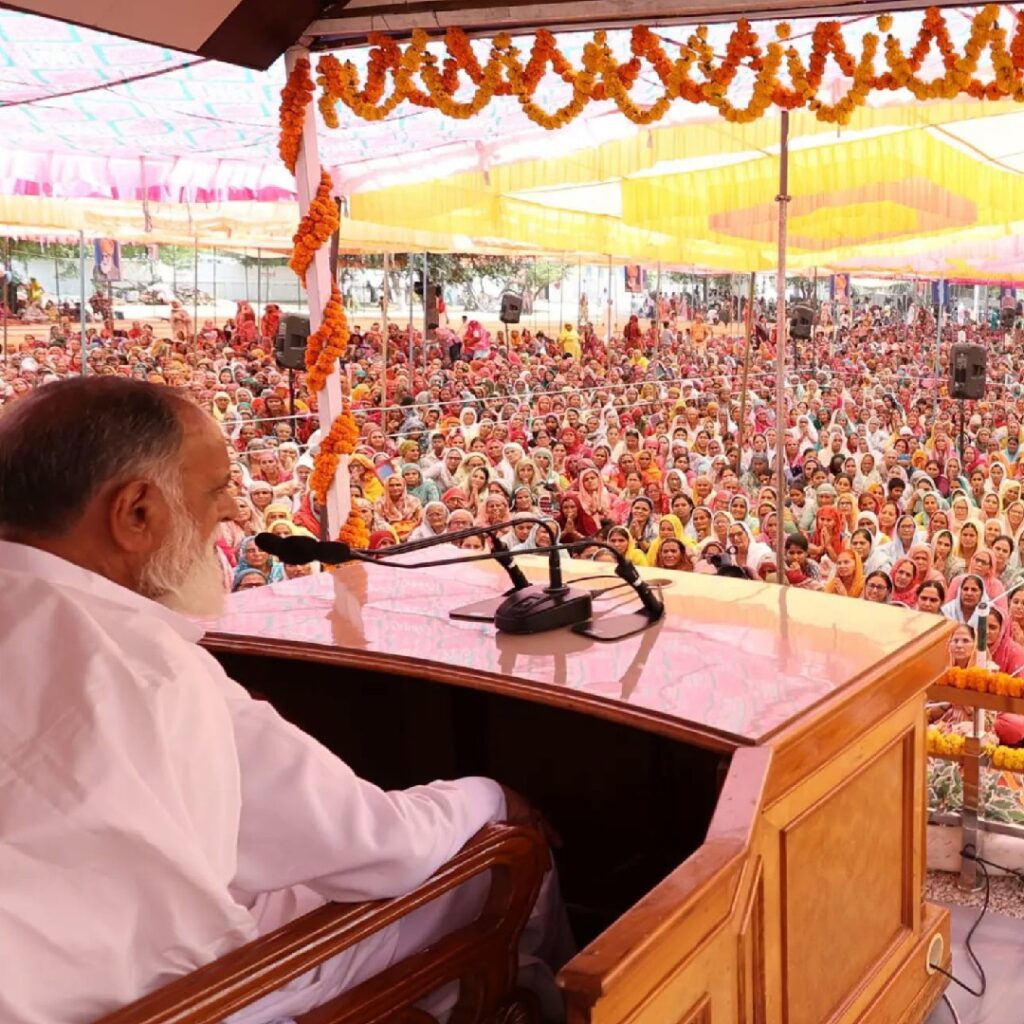
Rajgarh Satsang 2026 by Param Sant Kanwar Saheb ji Maharaj
Human beings are social by nature. We live in society, depend on one another, and learn many things through each other. When people live with love, cooperation, and understanding, they can face difficulties more easily. Therefore, both our surroundings and our company should be good. The environment in which we live and the people with whom we spend our time have a deep effect on our thoughts, habits, and way of life.
Today, human beings have greatly disturbed the balance of nature. Trees have been cut on a large scale, hills have been destroyed, lakes and ponds have been filled, and land has been used without thinking about the future. Large buildings, excessive construction, and careless use of natural resources have changed the original form of nature. As a result, the climate is becoming hotter, glaciers are melting, natural disasters are increasing, and new diseases and difficulties are appearing.
We must understand that nature is not separate from us. Water, air, food, land, and the other elements of nature support our life. We often say, “Water is life,” but clean air, fertile soil, trees, and food are also essential for life. If the balance of even one natural element is disturbed, human life is affected.
Therefore, we should not interfere unnecessarily with nature. We should protect trees instead of cutting them and plant as many new trees as possible. Trees give shade, improve the soil, help bring rain, reduce heat, and support agriculture. If we protect nature, nature will also protect us. Taking care of the environment is not only a social responsibility; it is also our duty towards future generations.
Human beings may collect many comforts and facilities, but true peace cannot be found only in material things. We may have good food, fine clothes, beautiful houses, wealth, vehicles, and many other comforts, but these things alone cannot give lasting happiness. The peace found in devotion to God is different from every worldly pleasure.
Human life has not been given only for eating, drinking, earning money, taking care of the body, and living for our family. These things are necessary, but they are not the complete purpose of life. The real importance of human birth is understood when a person begins to think about God, the soul, karma, and the purpose of existence.
According to the teachings of the saints, human birth is a precious opportunity. In this life, a person can meet a Guru, listen to Satsang, receive Naam, understand right and wrong, and make a conscious effort to improve spiritually. Therefore, this opportunity should not be wasted only in worldly desires.
We do not know how many lives we have already passed through or how many more may remain. But when we have received this human body, intelligence, understanding, Satsang, Guru, and Naam, we should make proper use of them.
Naam has great importance on the spiritual path. Saints describe Naam as a spiritual medicine that purifies the heart, improves our thoughts, and helps us rise above the burden of our actions. Through remembrance of God and sincere spiritual practice, a person gradually becomes cleaner from within.
When we repeatedly listen to the teachings of saints, one message becomes clear: spiritual progress is not possible without remembering God. Naam develops purity, humility, love, patience, and awareness. It helps a person turn away from harmful habits and directs the mind towards God.
Karma is also a very important law of life. Whatever a person does has a result. Good actions produce good effects, while wrong actions eventually bring suffering. We may not remember what we have done in previous lives, but the principle of karma teaches us to become responsible for our actions today.
Instead of blaming God whenever difficulties come, we should examine our own actions and learn from them. We should try to act with honesty, compassion, and wisdom. Human life becomes meaningful when our actions become better.
The human body itself is a priceless gift. We often understand the value of health only when some part of the body stops working. A person who cannot see understands the value of eyesight. Someone who cannot walk understands the value of healthy legs. Yet those who have a healthy body often waste it in addictions, anger, fighting, unhealthy habits, and careless living.
We should value every breath. If someone gives us a glass of water when we are thirsty, we thank them. If someone gives us food when we are hungry, we remember their kindness. But the One who has given us life, breath, body, mind, food, water, family, and countless other blessings is often forgotten.

Gratitude should become a part of our daily life. Instead of remembering God only in times of trouble, we should remember Him in good times as well.
When a person is alone, he should use some of that time to remember God. Many people say, “My mind does not stay still. I cannot meditate. My attention keeps wandering.” Even then, one can simply speak to God sincerely.
In solitude, we can say, “O Lord, I make mistakes knowingly and unknowingly. I do not have enough strength to overcome all my weaknesses by myself. Please guide me, forgive me, and help me leave wrong habits.”
A sincere prayer from the heart has great value. Spiritual practice is not only about complicated methods. Sometimes an honest conversation with God can deeply change a person.
When we sit with good people or fellow seekers, our discussions should also become better. Instead of wasting all our time discussing money, business, other people, conflicts, or criticism, we should sometimes discuss Satsang, Naam, meditation, good conduct, and the qualities of God.
Good company lifts the mind. Bad company slowly pulls it down. The people around us influence our thinking. If we constantly sit among people who speak about jealousy, cheating, anger, fights, and criticism, those thoughts also begin to enter us. Therefore, we should carefully choose our company.
True devotion requires sincerity. God is not impressed by outer display, social status, wealth, caste, or learning. What matters is the purity of the heart.
There is a beautiful spiritual story that explains this. A saint once met a divine being carrying a book. The saint asked what was written in it. The divine being replied, “This book contains the names of those who love and remember God.” The saint searched for his own name but could not find it. He calmly said, “It does not matter if my name is not written there. God’s name is written in my heart.”

The next day, the divine being appeared again with another book. This time, the saint’s name was written at the very top. When the saint asked why, the divine being explained, “Yesterday’s book contained the names of those who remember God. This book contains the names of those whom God Himself remembers.”
The moral is very deep: true devotion is not about proving how much we love God. What matters is becoming so sincere, pure, humble, and selfless that we become worthy of His grace. A heart filled with genuine faith and love is more valuable than outward display.
A person may know many religious books and still remain far from inner truth if ego, pride, selfishness, and dishonesty remain inside. Faith becomes powerful when it is joined with truthfulness, love, humility, discipline, and service.
Service is one of the most important parts of devotion. A person who serves without pride gradually becomes humble. True service reduces ego and teaches us to place the needs of others before our own comfort.
Devotion cannot be purchased with money. It does not belong only to rich people, scholars, or people of a particular family or community. It is gained through love, faith, sacrifice, discipline, and selfless service.
Caste, status, and social pride should never become barriers on the spiritual path. God does not belong to one caste, one class, one religion, or one group. All human beings are His children. A person who truly seeks God must learn to rise above feelings of high and low.
Knowledge is also not the same as information. A person may read many books, give impressive speeches, and win arguments, yet still remain trapped in ego and illusion. Real knowledge begins when confusion is removed and the mind turns from attachment towards truth.
This does not mean that we must leave our family, work, or responsibilities. Spiritual life does not teach us to run away from our duties. We must live in the world, perform our responsibilities, earn honestly, care for our family, and continue doing good work.
The teaching is to perform our duties without becoming completely trapped in attachment. Work sincerely, but keep the mind connected with God. Do not let money, property, position, family pride, or social respect become the only purpose of life.
The Bhagavad Gita also teaches that we should perform our duty and not remain constantly worried about the result. Our responsibility is to act wisely and honestly. The result should be left to God.
The mind is easily distracted. A very small event can take our attention away from a good thought. This is why spiritual discipline is necessary. Maya does not mean only money. Anything that keeps the mind so involved in the temporary world that we forget the real purpose of life becomes a form of Maya.
Family quarrels, greed, property disputes, addictions, jealousy, pride, anger, and endless desires can consume a person’s entire life. Therefore, the principle should be simple: live and let others live.
Do not turn every difference into an argument. If someone wants to prove that they are greater, there is no need to fight. Let them be greater. Our aim should not be to defeat others; our aim should be to improve ourselves.
Words alone have little value if our actions are different. It is easy to speak sweetly, give advice, or talk about religion. The real test is whether our conduct matches our words. Therefore, do not copy the spiritual practices of others blindly. Every practice requires proper understanding, discipline, and guidance. Outer imitation without inner sincerity can create confusion rather than spiritual growth.
Peace at home is also very important. Where family members speak lovingly, respect elders, help one another, and live with understanding, the home becomes peaceful like heaven. But where there is constant anger, addiction, gambling, insult, and fighting, the mind cannot remain peaceful.
How can a person meditate properly if the mind is constantly involved in quarrels?
For this reason, we should create a peaceful atmosphere in our homes. Speak gently, respect elders, care for children, solve problems with patience, and avoid unnecessary conflicts.
Our thoughts shape our life. What we repeatedly think about slowly becomes part of our nature. Therefore, keep good thoughts in mind. While sitting, walking, working, resting, or going to sleep, try to remember God whenever possible.
There are four simple habits that can greatly improve spiritual life.
First, when alone, remember God sincerely.
Second, when sitting with good people, discuss good and spiritual matters instead of wasting time in criticism and negativity.
Third, remain thankful for whatever God has given. Every day remember the blessings you already have instead of thinking only about what is missing.
Fourth, ask forgiveness for your mistakes and pray for strength to live a better life.
These simple habits strengthen faith in the Guru and increase love for Naam. Gradually, the heart becomes cleaner and the mind begins to enjoy remembrance of God.
We should also remember that worldly things will not go with us. We spend our whole life collecting land, houses, vehicles, jewellery, money, and other possessions. But when the body dies, even the clothes, watch, and jewellery are removed. Everything remains here.
If nothing material goes with us, then we must think carefully about what truly belongs to us.Our good actions, spiritual progress, love, devotion, and the remembrance of God are far more valuable than temporary possessions.Therefore, do not become so attached to worldly things that you forget the One who gave you everything.
Respect everyone. All religions deserve respect. Saints and Gurus guide people according to their own path and understanding. We should not spend our time criticizing another person’s religion, Guru, or faith.
Even if we see some weakness in another person, we should not develop the habit of constantly speaking about it. If we repeatedly look for faults, our mind becomes trained to see only faults.Instead, train yourself to notice goodness.